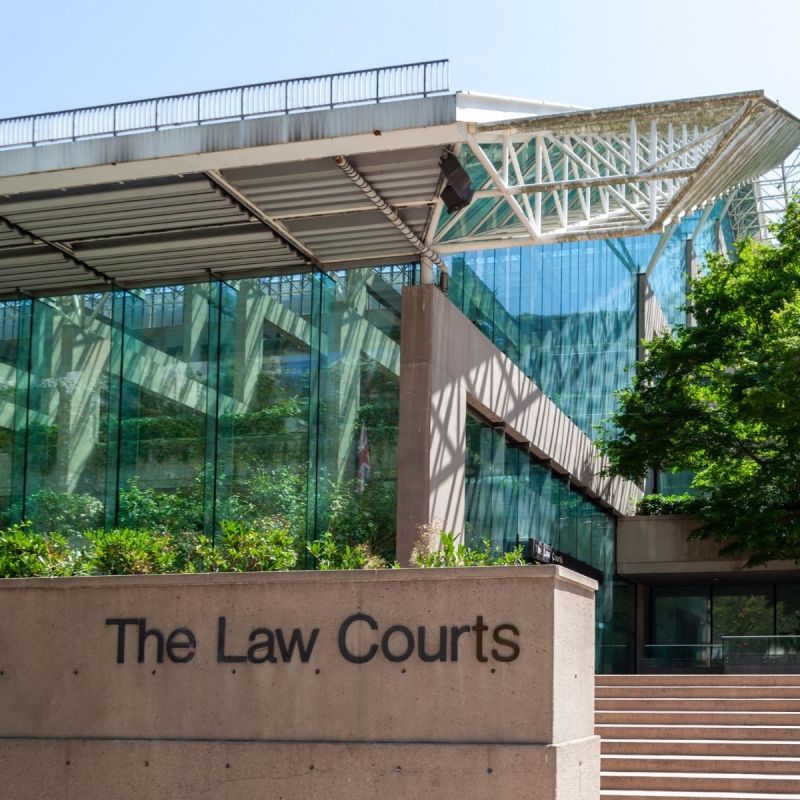
If you are dealing with a claim in BC Small Claims Court, one of the first steps you will encounter is service. Service simply means formally providing a court document to another party, and the method of service will depend on what document is being served and who it is being served on.
While service may seem straightforward, failing to serve a document correctly can cause unnecessary procedural issues. Understanding the applicable requirements can help ensure that a Small Claims action proceeds smoothly.
Serving a Notice of Claim
A Notice of Claim begins a Small Claims lawsuit and it has specific service requirements. Each defendant must be served with their copy of the Notice of Claim, a blank Reply (Form 2), your Address for Service, and a blank Address for Service (Form 38).
If the defendant is an individual, the Notice of Claim can generally be served personally or sent by registered mail. The claimant does not have to serve the documents personally; someone else can serve them, or a professional process server can be hired to do so.
If the defendant is a company, different rules apply. Depending on the circumstances, service may be made through the company’s registered office, place of business, or certain individuals associated with the company.
Practical tip: If you are suing a company, make sure you have its correct legal name and current registered office information. The name on a storefront, invoice, or website may not be the company’s legal name. A claimant suing a company must also file a corporate search showing the company’s most recent registered office address with the Notice of Claim.
Different rules apply to partnerships, societies, municipalities, extraprovincial companies, individuals under 19, and certain other defendants. Before serving a document, check the applicable rule to ensure the correct method is being used.
Can you serve legal documents by email or regular mail?
Sometimes, but not always.
Once a proceeding is underway, many documents can be served by ordinary mail or by email, using the address for service a party has provided. However, certain documents, including a Notice of Claim, cannot simply be emailed.
Where email service is permitted, timing also matters. An email sent before 4 p.m. on a business day is generally considered served that day. If it is sent after 4 p.m. or on a non-business day, it is generally considered served on the next business day.
Documents properly served by ordinary mail are generally presumed served 14 days after mailing, unless there is evidence to the contrary.
Keep proof of service
Always keep a record of what you served, how it was served, and when.
Depending on the method of service, this might include a Certificate of Service on its own (for personal service), Canada Post’s delivery confirmation or signature (for registered mail), or a printout showing the sender, recipient, date and time the email was sent (for email).
If service is ever questioned, having a clear record can help demonstrate that the document was properly served.
What if you cannot serve the defendant?
Sometimes, a defendant has moved, their address is outdated, or repeated attempts at service are unsuccessful.
If you cannot serve a Notice of Claim using the usual methods permitted by the Small Claims Rules, B.C. Reg. 261/93 (the “Rules”), you may be able to apply to the Small Claims Registrar for permission to serve it another way.
Keep a record of your attempts to locate and serve the defendant, as the Registrar will want to know what steps have already been taken to try and complete service.
Watch the deadlines
A Notice of Claim generally must be served within 12 months after it is filed, unless it is renewed in accordance with the Rules.
Service also starts the defendant’s timeframe to respond. A defendant served in British Columbia generally has 14 days after service to file a Reply, while a defendant served outside British Columbia generally has 30 days.
Key takeaways
Before serving a Small Claims document, consider:
- What document you are serving;
- Who you are serving;
- How the Rules allow you to serve it; and
- What proof of service you should keep.
Service is a relatively small part of the Small Claims process, but getting it right can prevent unnecessary procedural issues later.
For more information, the Province of British Columbia’s Serving Documents guide and the Justice Education Society’s Small Claims BC website provide helpful step-by-step resources.
If you have questions about serving court documents or navigating the Small Claims process, contact Designated Paralegals Benazeer Mohammed or Megan Stratikopoulos – we’re here to help!