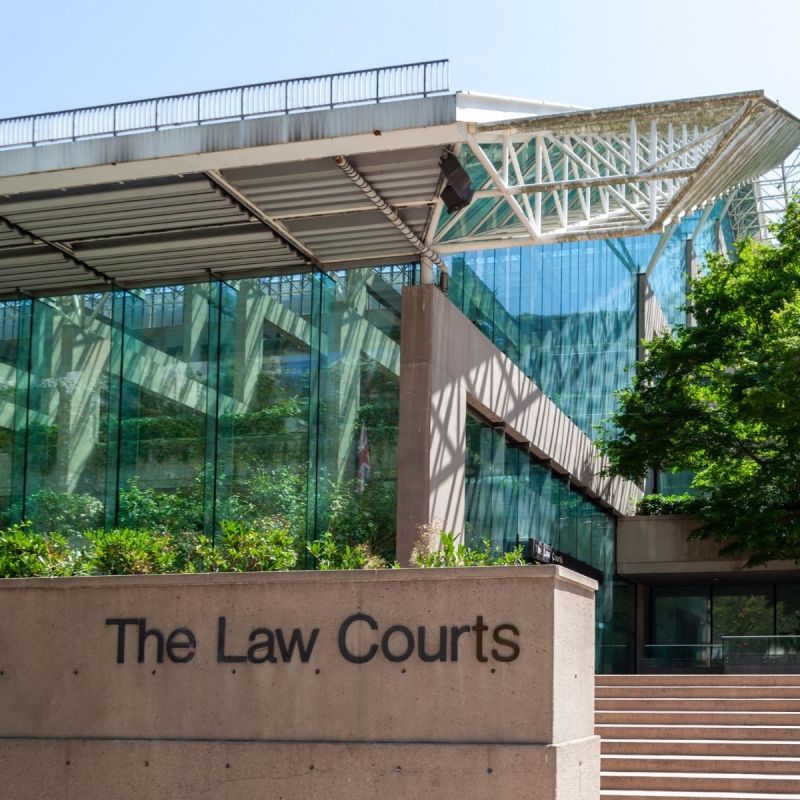
If you are pursuing a wrongful or constructive dismissal claim, one of the first decisions you may face is where to bring your case. In British Columbia, employment disputes that do not fall within the jurisdiction of the BC Human Rights Tribunal, the Employment Standards Branch, or WorkSafeBC land in either Small Claims Court or the Supreme Court of British Columbia.
Choosing the right court can have a significant impact on the cost, risk, and whether your case can even be heard.
The difference in claim value
The primary distinction between the two courts is the value of the claim:
- Small Claims Court: disputes between $5,001 and $35,000
- BC Supreme Court: disputes above $35,000, with no upper limit
Small Claims Court is designed to be more accessible, with plain-language forms and a more conversational, judge-led process. By contrast, Supreme Court operates under a more formal set of civil rules, and legal representation is close to essential given the procedural complexity.
Costs and litigation risk
Court filing fees in Small Claims Court are relatively modest, generally amounting to less than $200. Supreme Court fees are higher, and its formal procedures, pleadings, discovery process, and pre-trial applications can increase legal costs quickly, often out of proportion to a claim only modestly exceeding $35,000.
The more significant difference, however, is the potential cost consequences. In Small Claims Court, a losing party cannot be ordered to pay the other side’s legal fees – only filing fees and limited expenses (and, in some circumstances, a penalty based on the value of the claim). In Supreme Court, however, the losing party is typically ordered to pay a portion of the winner’s legal costs, which can add thousands to the bill. A party’s rejection of a reasonable settlement offer may increase that exposure further.
Abandoning a portion of the claim
Where a claim slightly exceeds the Small Claims Court limit (e.g. $38,000-$45,000), it may be possible to stay in Small Claims Court by trading a small amount of principal for lower cost and capped risk.
It is important to note that the $35,000 limit excludes court-ordered interest and expenses, meaning the total recovery can still exceed $35,000. Because any abandoned portion of the claim is permanent, individuals should carefully consider this option and confirm the math with legal counsel before proceeding.
Claims that must be brought in Supreme Court, regardless of amount
Certain matters fall within the exclusive jurisdiction of the Supreme Court, regardless of the amount in the dispute. These include:
- Defamation claims, including libel and slander;
- Injunctions, such as restraining enforcement of a non-competition clause;
- Claims exceeding $35,000 where the excess is not abandoned;
- Disputes involving title to land; and
- Class actions and complex equitable claims, such as breach of fiduciary duty.
The bottom line
When deciding whether to proceed in Small Claims Court or the Supreme Court, it is important to consider more than the value of the claim alone. The complexity of the process, the potential legal costs, and the financial risks associated with litigation can all affect which forum is most appropriate.
For many lower-value wrongful dismissal and constructive dismissal claims, Small Claims Court offers a more accessible and cost-effective option. Higher-value claims, as well as matters involving injunctions or defamation, will generally require proceedings in Supreme Court.
Affordable representation: Innovation Sandbox paralegals
For some individuals, the cost of legal representation can be a barrier to pursuing a claim.
Ascent paralegals Megan Stratikopoulos and Benazeer Mohammed are authorized participants in the Law Society of British Columbia’s Innovation Sandbox program, which permits them to represent clients directly in Small Claims Court matters. Because paralegal rates are generally lower than lawyer rates, this makes professional representation realistic for claims where hiring a lawyer outright would not make financial sense.
For those who prefer to represent themselves, Ascent Employment Law also offers ad hoc legal services to self-represented litigants. These services include assistance with specific steps, such as drafting a Notice of Claim, preparing for a settlement conference, or reviewing a demand letter, without requiring full representation throughout the matter.
If you have questions about a potential employment claim or would like assistance determining the most appropriate forum for your dispute, please contact Megan Stratikopoulos, Benazeer Mohammed, or any of the lawyers at Ascent Employment Law – we’re here to help!